Algorithms (53)
The technical core: each algorithm has a definition, a runnable demo, and the works that use it. See how they interconnect in the co-occurrence graph, or their genealogy — many long predate generative art — on the timeline.
All algorithms
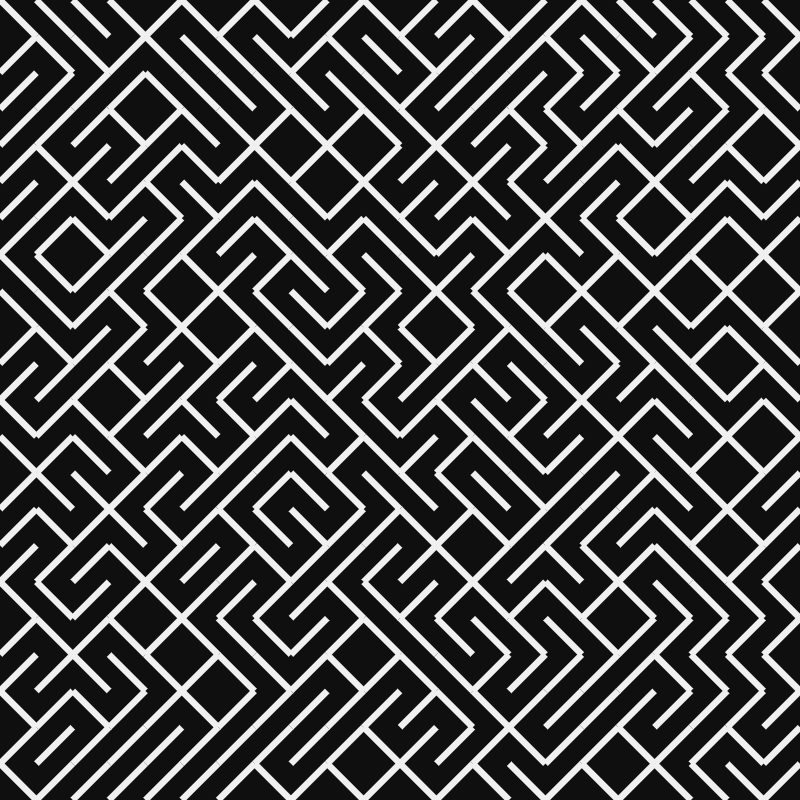
- 10 PRINT · 4 works A minimal maze-like pattern from the one-line Commodore 64 program `10 PRINT CHR$(205.5+RND(1)); : GOTO 10`: it fills a grid by randomly choosing one of two diagonal characters per cell.
- 3D Mesh / Geometry · 57 works Building, deforming and rendering 3D meshes (with three.js, regl, etc.) as the core of a piece — covering procedural geometry generation and instanced drawing.
- Audio-Reactive · 32 works Visuals driven by the spectrum and dynamics of an audio signal (via FFT). Often seen in browser/Tone.js works where colour, motion and form respond to sound in real time.
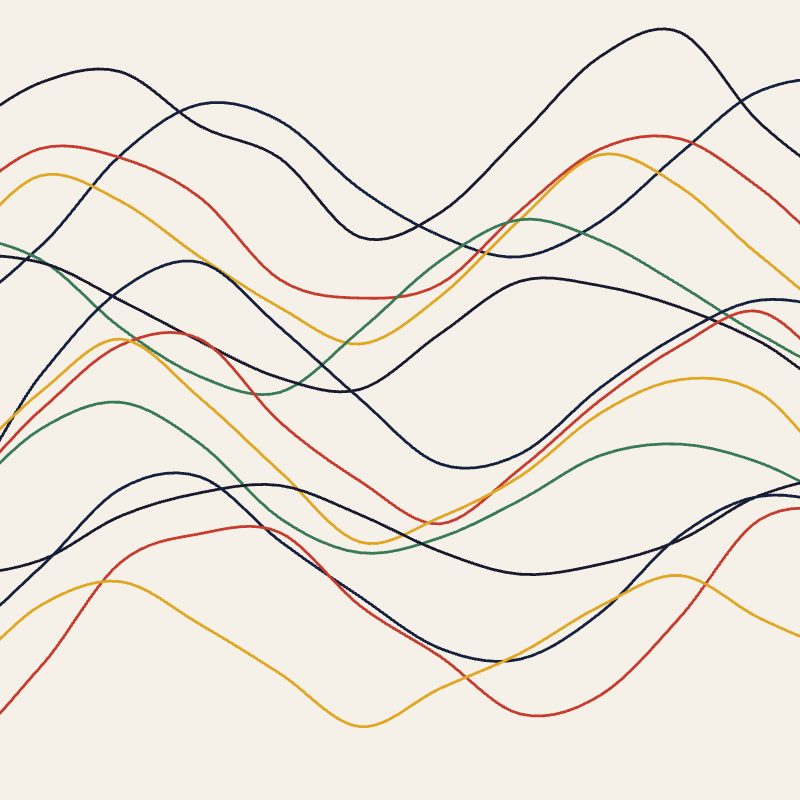
- Bezier / Catmull-Rom Splines · 102 works Classic methods for building smooth curves from a few control points — Bézier (control points pull the curve) and Catmull-Rom (the curve passes through the points). Used for ribbons, plant stems and flowing abstract line work.
- Boids / Flocking · 11 works An agent-based model of flocking in which each "boid" steers by three local rules — separation, alignment and cohesion — applied only to nearby neighbours, so coordinated group motion emerges with no central control.
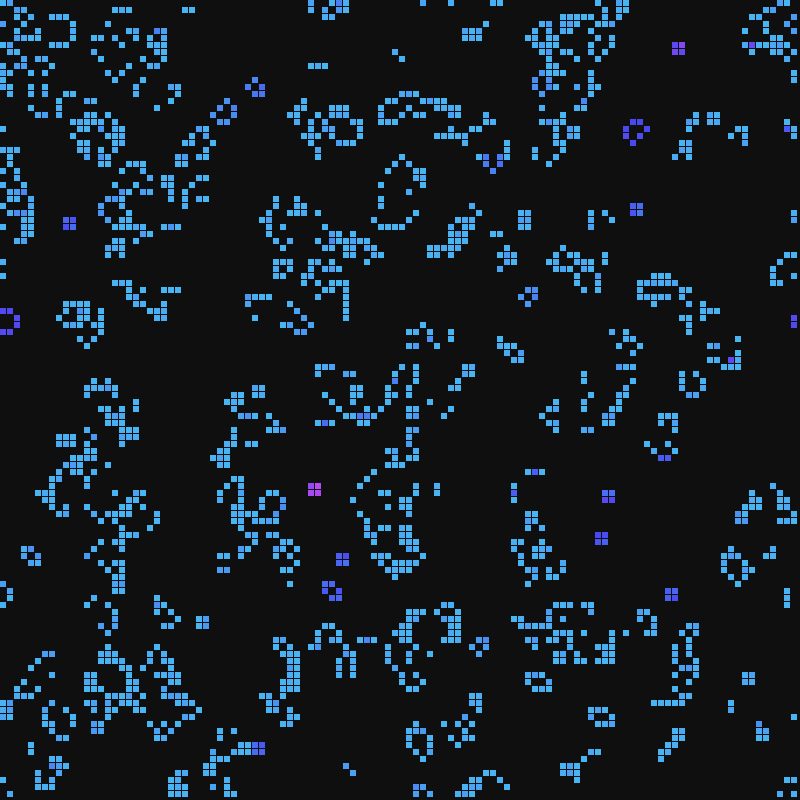
- Cellular Automata · 15 works A discrete system in which each cell on a grid updates its state in step, according to a fixed rule applied to its neighbours' states. Simple local rules produce complex global behaviour — Conway's Game of Life, Wolfram's elementary CA, and a discrete cousin of reaction-diffusion.
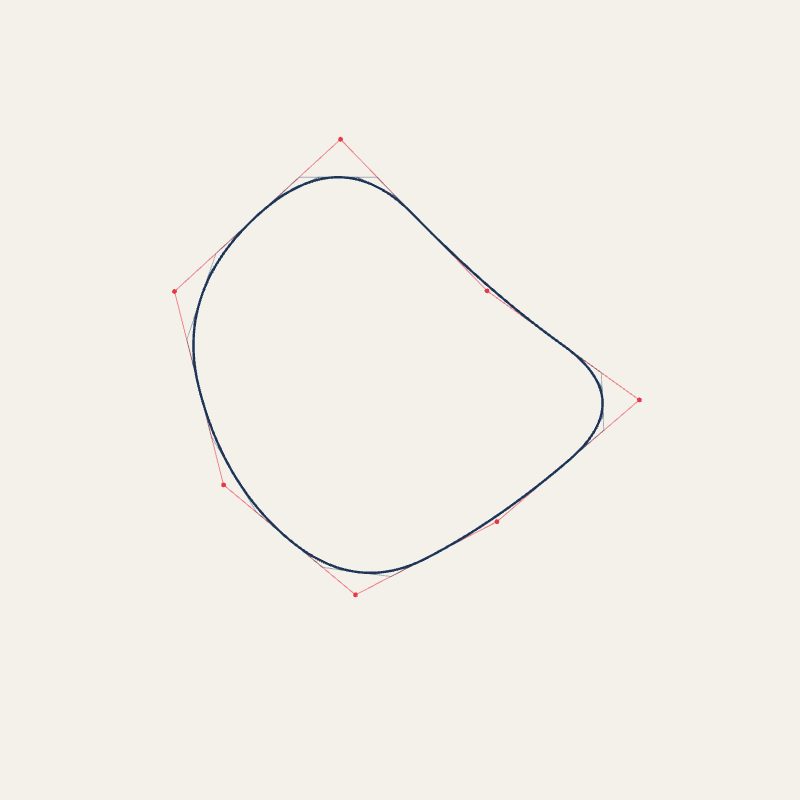
- Chaikin Corner-Cutting · 1 work A curve-smoothing subdivision scheme. Each refinement pass replaces every edge of a control polygon with two points set a quarter and three-quarters of the way along it, "cutting the corner". Repeated, the polygon converges to a smooth quadratic uniform B-spline.
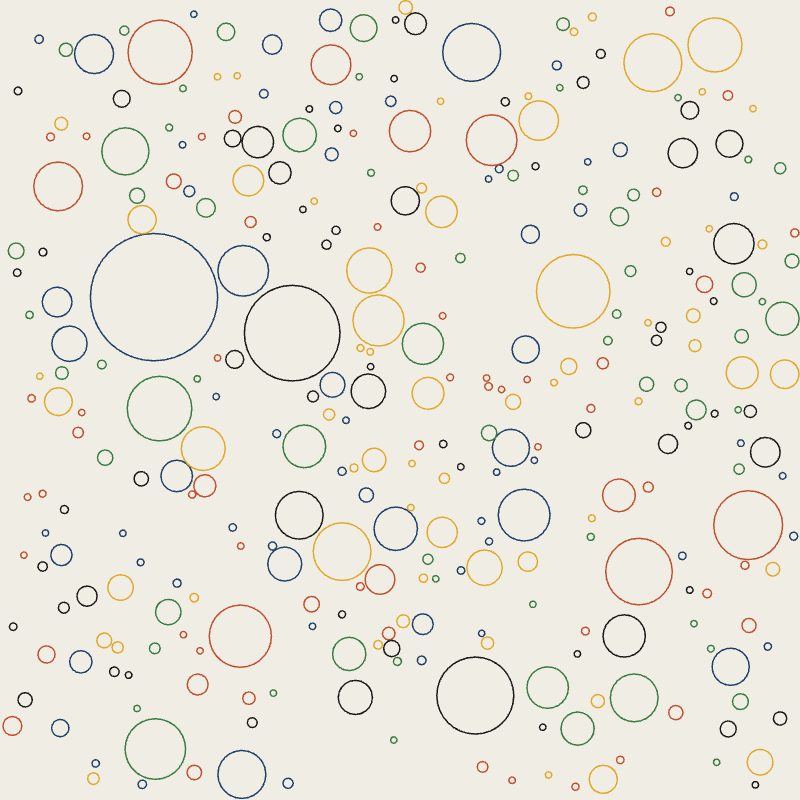
- Circle Packing · 12 works Filling a region with non-overlapping circles of varying size. In generative art it is usually done by a grow-and-reject loop rather than an exact optimal packing, giving dense, organic, bubble-like fields.
- Curl Noise · 0 works A flow technique that takes the curl of a smooth scalar potential field (typically Perlin/Simplex noise) as the velocity. Because the curl of a potential is divergence-free, the field is incompressible — particles swirl in fluid-like eddies without bunching up or thinning out.
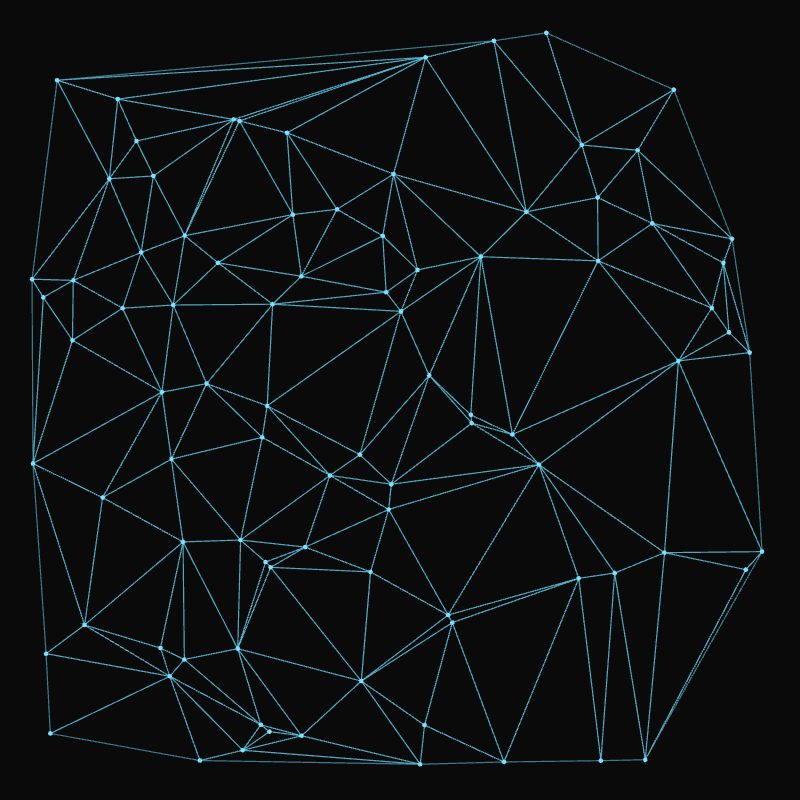
- Delaunay Triangulation · 8 works A triangulation of a point set in which no point lies inside the circumcircle of any triangle — maximising the minimum angle to avoid slivers. The dual of the Voronoi diagram; a basis for terrain meshes and polygon art.
- Differential Growth · 1 work A growth simulation in which a connected path of nodes elongates faster than its surrounding space can accommodate, forcing it to buckle and fold. The result mimics natural forms produced by uneven growth — brain folds, leaf and coral margins, lichen, and convoluted membranes.
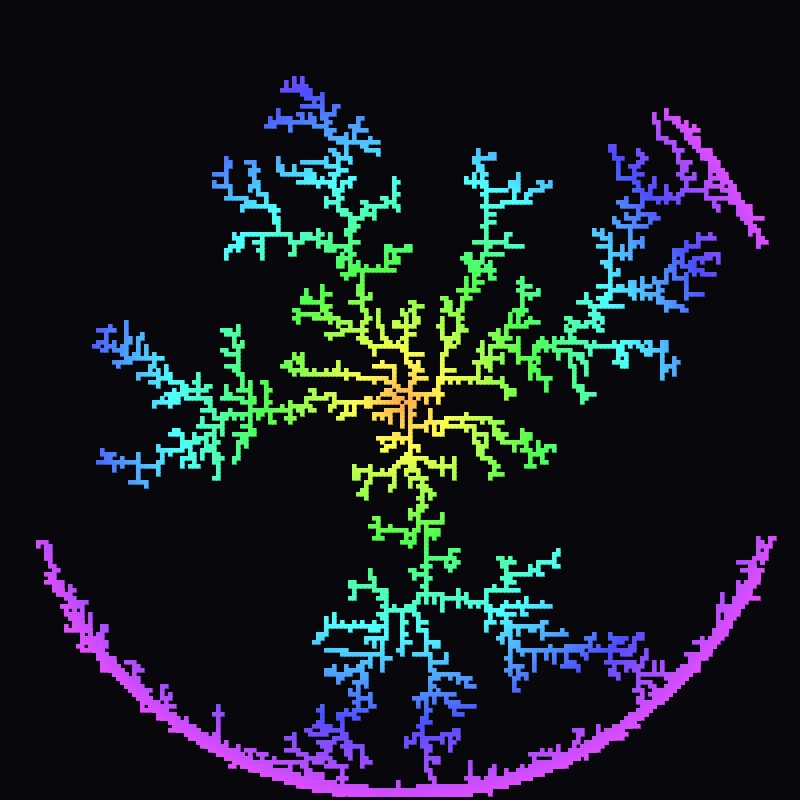
- Diffusion-Limited Aggregation · 3 works A growth process in which randomly walking particles stick on contact with a growing cluster, producing fractal, branching dendritic patterns (like frost, coral, or mineral deposits).
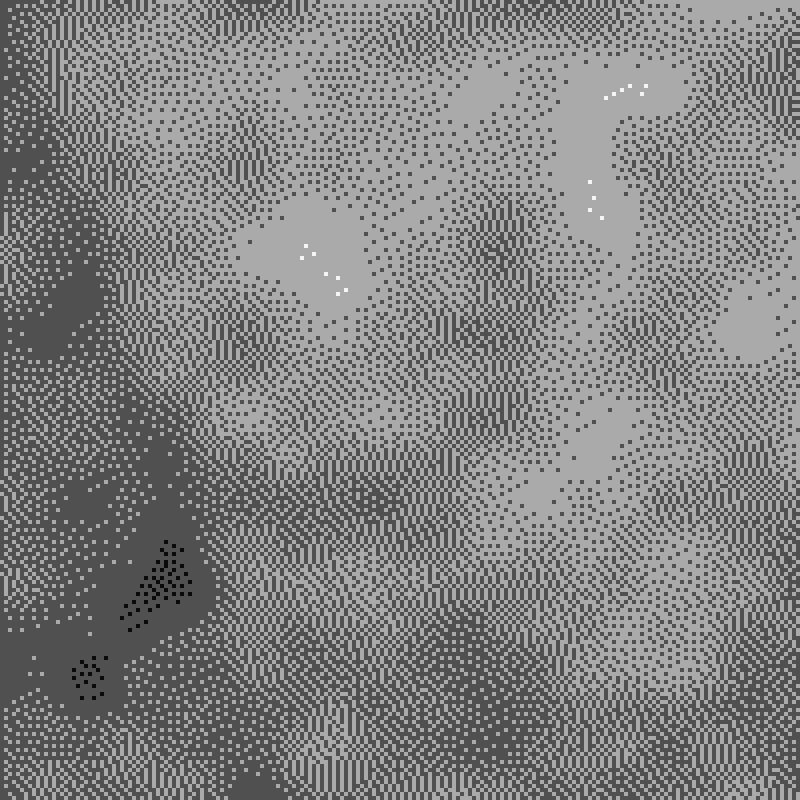
- Dithering · 12 works Representing continuous tones with a limited palette by patterning the available colours so the eye blends them — via error diffusion (Floyd–Steinberg) or ordered/threshold matrices (Bayer).
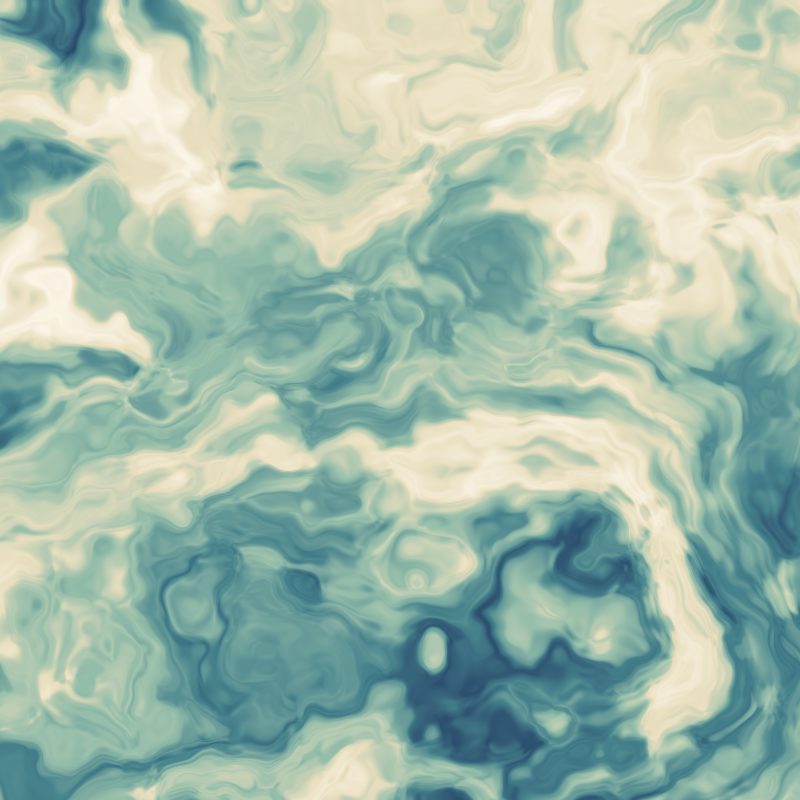
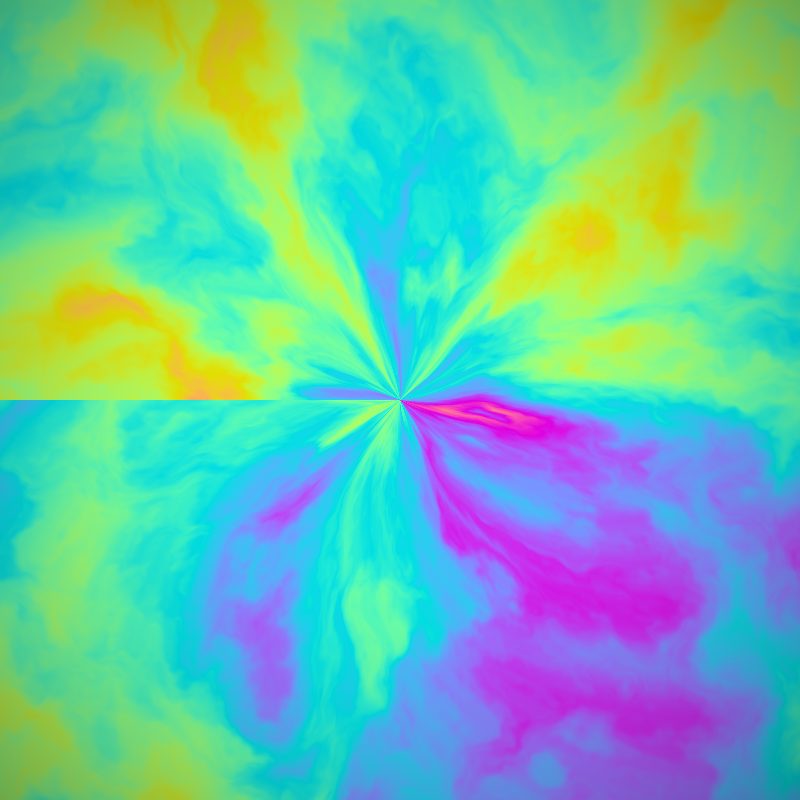
- Domain Warping · 10 works Distorting the input coordinates of a noise (or pattern) function with another noise function before sampling it — producing organic, swirling, marbled textures from otherwise plain noise.
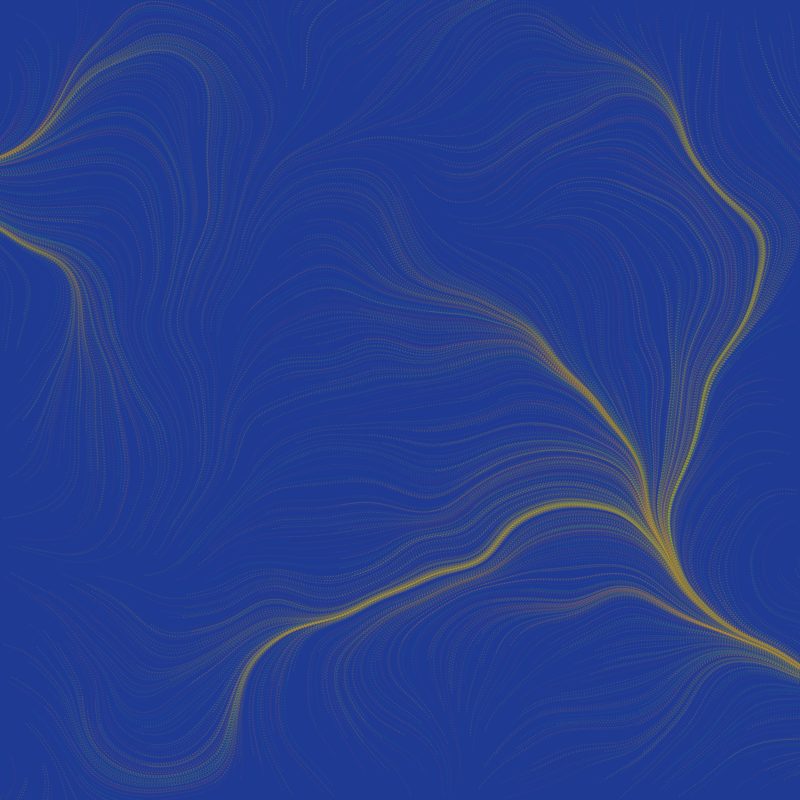
- Flow Field / Vector Field · 50 works A field that assigns a direction vector to every point of the plane; particles released into it trace paths by following the local direction. The angle is most often derived from Perlin/Simplex noise.
- Fractal / Recursive Subdivision · 25 works A general technique that generates self-similar structure by applying a rule to a shape and then to its parts, repeatedly — Koch curves, the Sierpiński gasket, recursive rectangle splits (Mondrian-like), and branching trees.
- Fractal Flame · 2 works A class of iterated function system (IFS) fractal that generalises the IFS with non-linear "variation" functions, log-density (tone-mapped) accumulation, and structural colouring — producing the smooth, luminous, smoke-or-flame-like forms popularised by software such as Apophysis.
- Fragment Shader (GLSL) · 162 works Per-pixel computation on the GPU: a fragment shader (GLSL) runs in parallel for every pixel to compute its colour from coordinates and uniforms — the base layer for procedural textures, raymarching and real-time generative visuals.
- Generative Adversarial Network (GAN) · 12 works A machine-learning approach in which two neural networks are trained against each other — a generator that synthesizes candidate images and a discriminator that judges whether a sample is real or generated. Their competition drives the generator to produce increasingly convincing novel imagery.
- Generative Typography · 19 works Form-making by parametrically transforming and arranging letters and words — spanning logos, posters and motion graphics as well as abstract lettering.
- Generative Typography / ASCII · 4 works Rendering an image as a grid of text characters, choosing each glyph by how well its ink density (or shape) matches the local tone — the basis of text-mode and ASCII-art visuals.
- Genetic Algorithm (Evolutionary Art) · 9 works A search/generation method modelled on biological evolution: a population of candidate artworks, each encoded as a "genome", is repeatedly evaluated by a fitness function — often the live choices of a human audience — and the fittest are bred (recombined) and mutated to form the next generation, so form emerges by selection rather than by direct design.
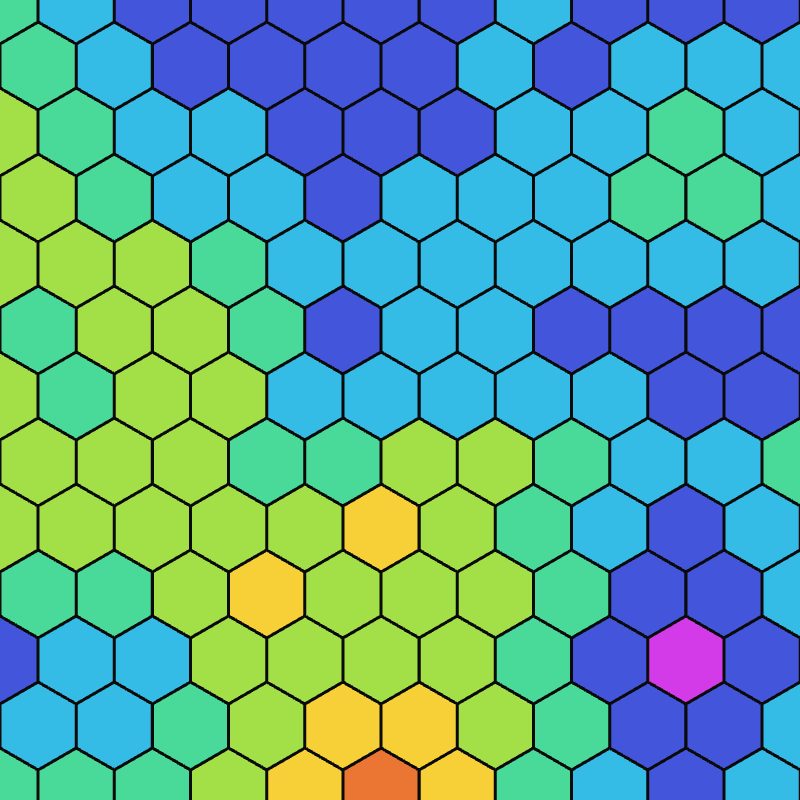
- Geometric / Hexagonal Tiling · 39 works Covering the plane with a regular arrangement of tiles — square, triangular, hexagonal, or aperiodic (Penrose) — as a structural scaffold for pattern.
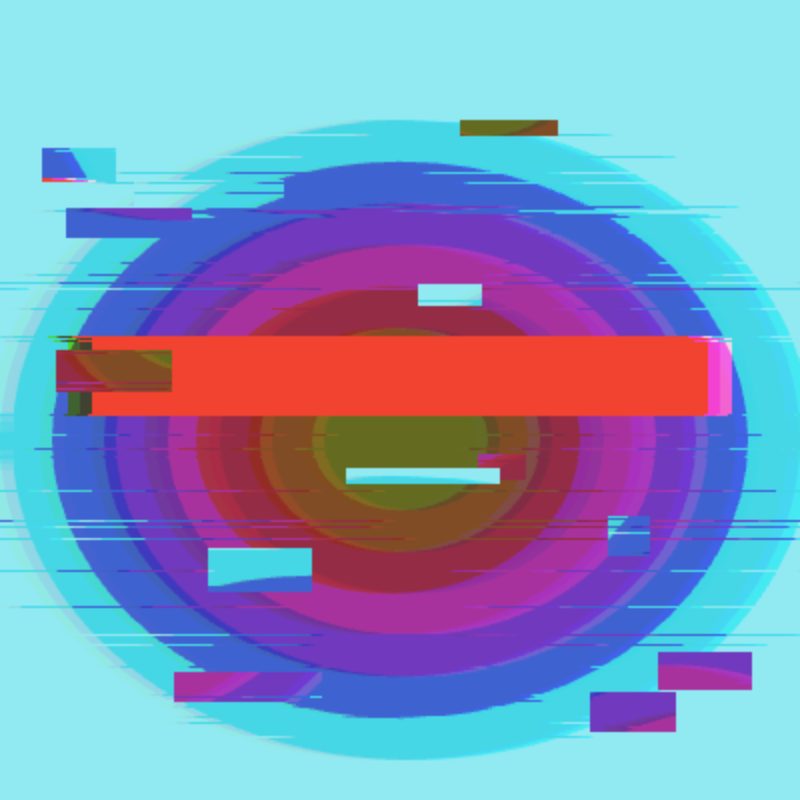
- Glitch / Datamosh · 26 works Aesthetics built from deliberate data corruption and misreading — pixel displacement, channel separation, JPEG block artefacts, and datamoshing of video compression.
- HSL / Hue Cycle · 134 works Generating rainbows and gradients by cycling hue around the colour wheel (HSL/HSV/Lab) as a function of position, index or time. The colouring behind Chromie Squiggle and many spectral palettes.
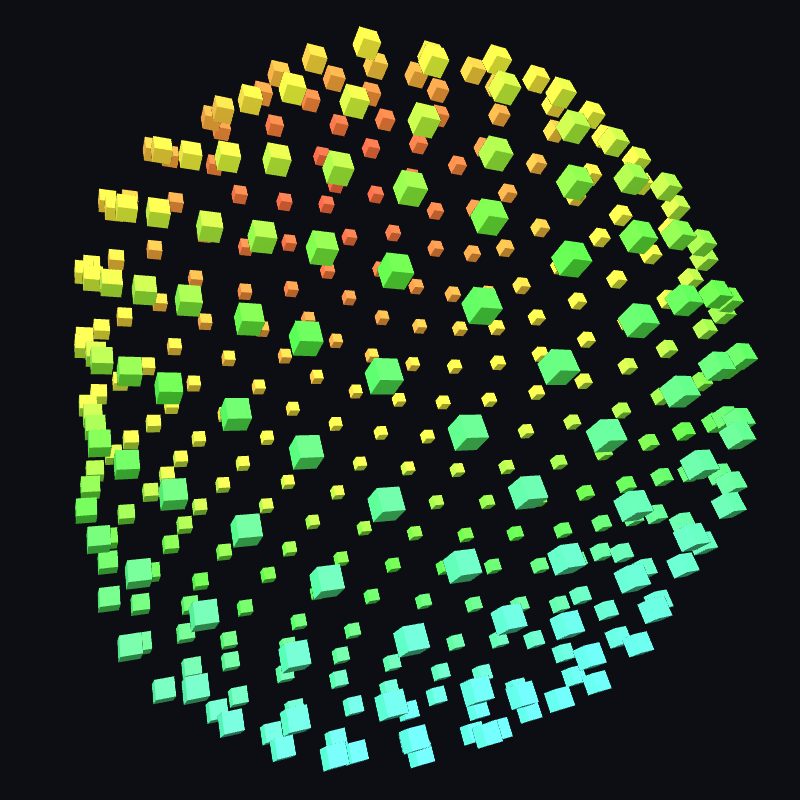
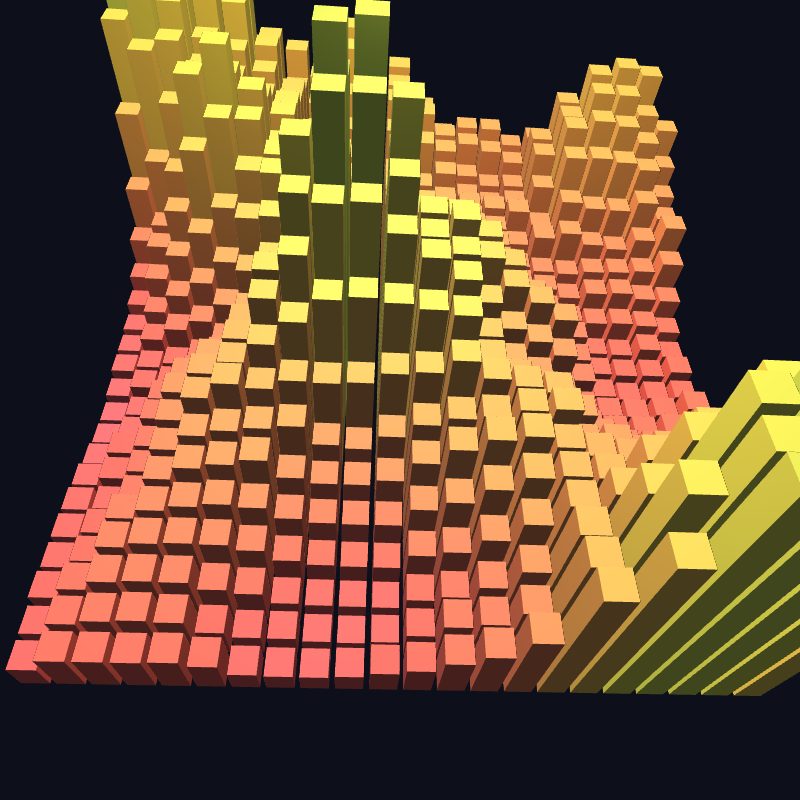
- Instanced Geometry · 18 works A 3D technique that draws many copies of one geometry in a single GPU call, each with its own transform — the efficient way to render forests, particle clouds and voxel fields by the thousand.
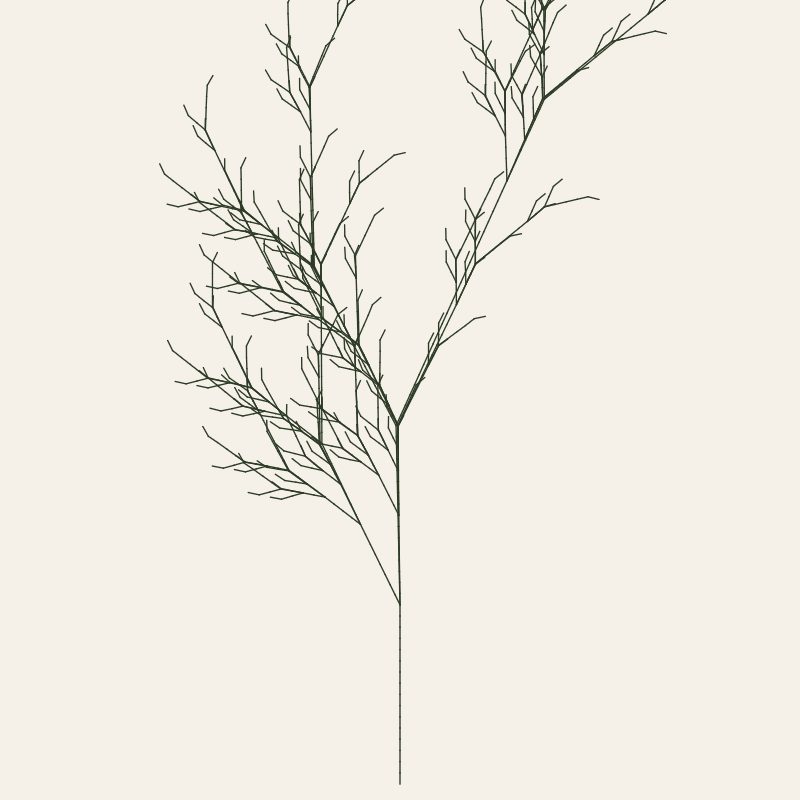
- L-System · 2 works A string-rewriting grammar (Lindenmayer system) that repeatedly replaces symbols by rules to grow a self-similar string, then interprets that string as turtle graphics. The classic use is branching plant structures.
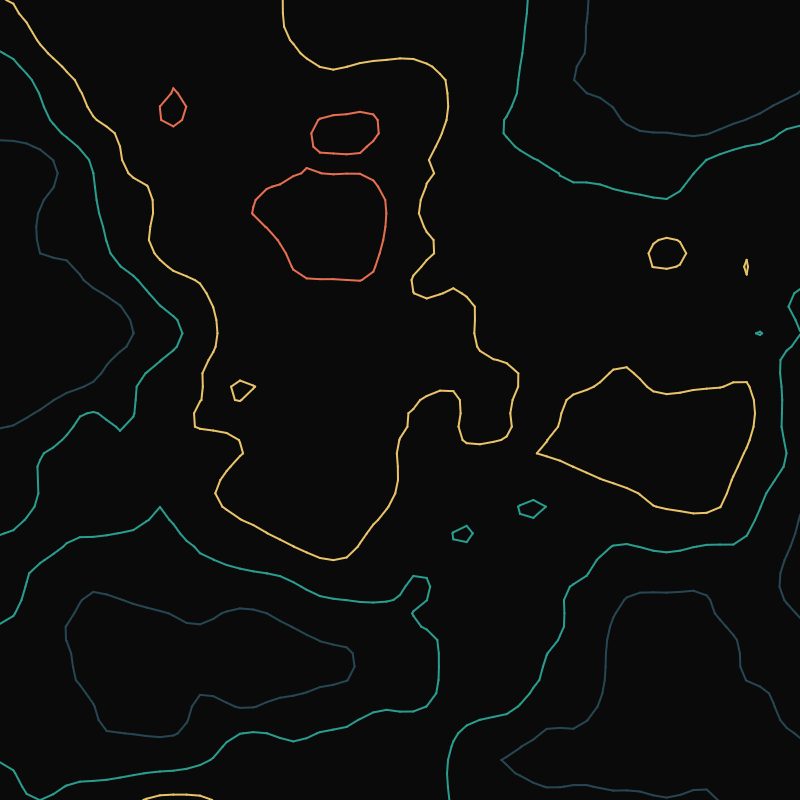
- Marching Squares / Contours · 26 works A 2D method for extracting contour lines (isolines) from a scalar field — the 2D case of Marching Cubes. Used for contour maps, metaball outlines and iso-surfaces of any value field.
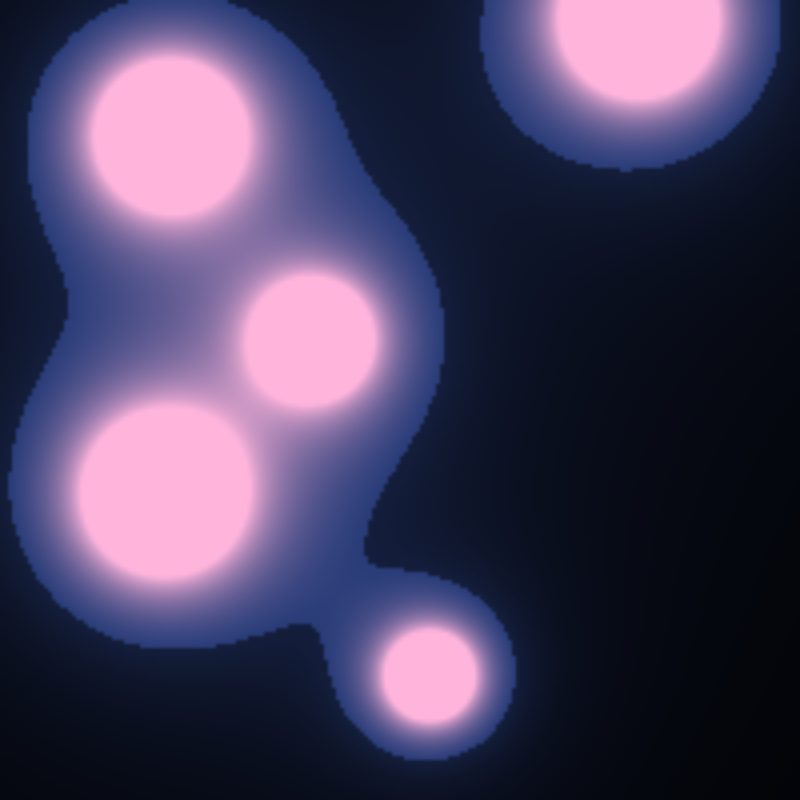
- Metaballs · 1 work Smooth, blob-like forms built by summing the implicit fields of several sources, so nearby blobs merge organically. The surface is the contour where the summed field equals a threshold, usually extracted with marching squares.
- Modular Assembly / Parametric Character · 25 works Building characters or objects by probabilistically combining parts drawn from categorised sets (heads, bodies, arms…) at defined attachment points — the classic "avatar/robot generator" approach (e.g. Algobots).
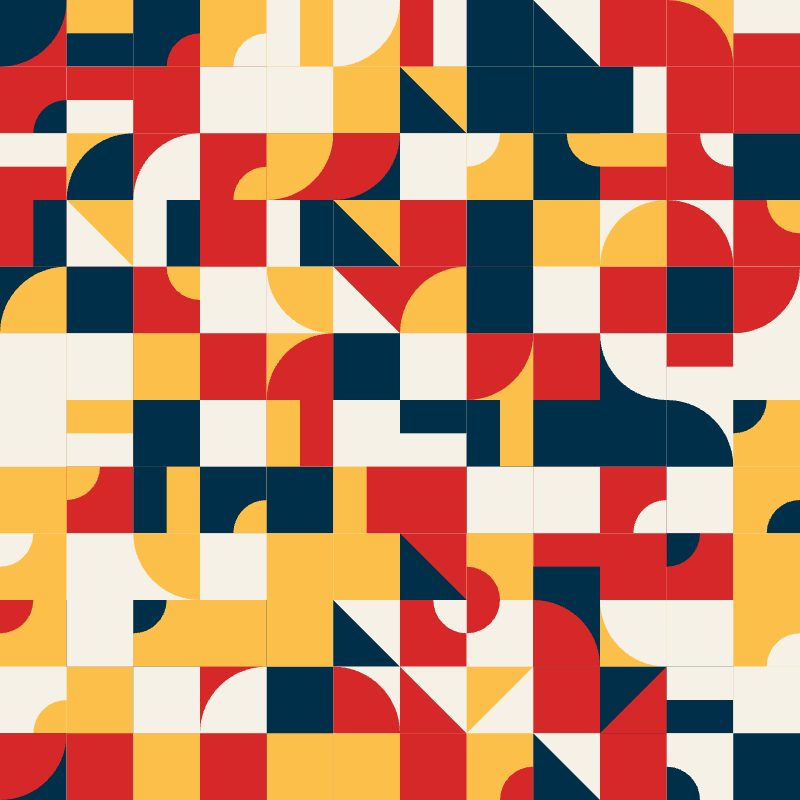
- Multi-color Modular Truchet · 7 works A multi-template Truchet tiling: a small set of square, triangle and quarter- circle motifs, each placed in 4 rotations and several variants, filled with flat multi-colour palettes for a Bauhaus / mid-century look (e.g. Harvey Rayner / patterndotco).
- Particle System · 63 works A general framework that simulates many small particles, each with properties like position, velocity and lifespan, updated together each frame. It is the umbrella under which flow fields, boids, and physics sketches sit.
- Perlin / Simplex Noise · 177 works A gradient-noise function that turns a regular lattice of pseudo-random gradients into a smooth, continuous, repeatable field. In generative art it is the workhorse for organic randomness — driving colour, position, density and motion without harsh jumps.
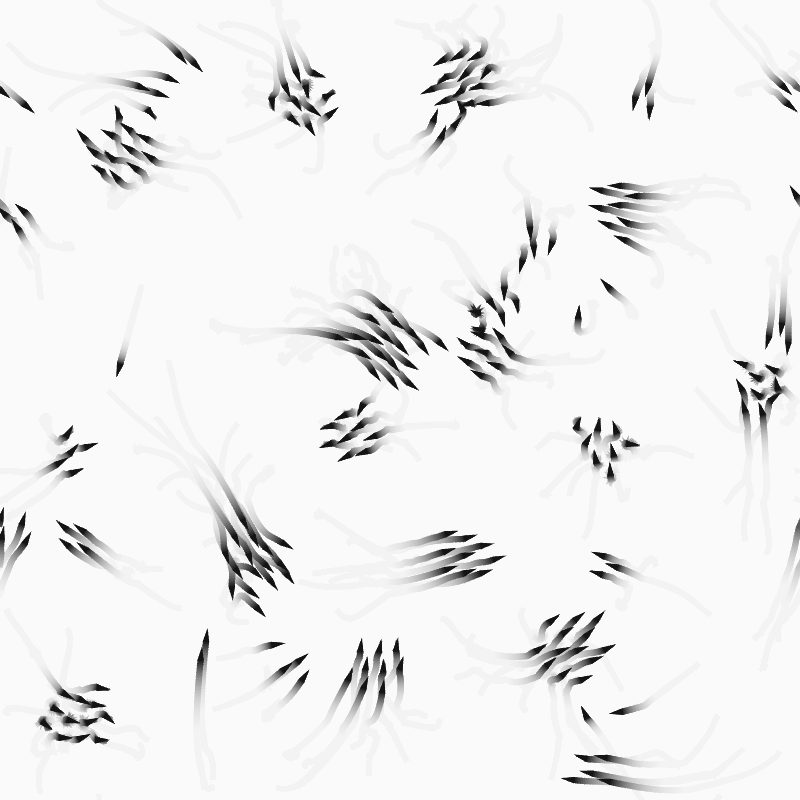
- Physarum (Slime-Mould Agents) · 1 work An agent-based model in which many simple particles each sense, follow, and deposit onto a shared diffusing trail map. From purely local sense–deposit–move rules the agents self-organise into dynamic, vein-like transport networks that approximate the foraging behaviour of the slime mould Physarum polycephalum.
- Physics Simulation · 12 works Using a physics simulation — rigid bodies, soft bodies/Verlet, collisions or fluids — as the primary engine that drives the artwork's form and motion.
- Pixel Sorting · 1 work A glitch technique that reorders the pixels within rows or columns of an image by some key (brightness, hue…), restricted to spans selected by a threshold — smearing the image into characteristic streaks.
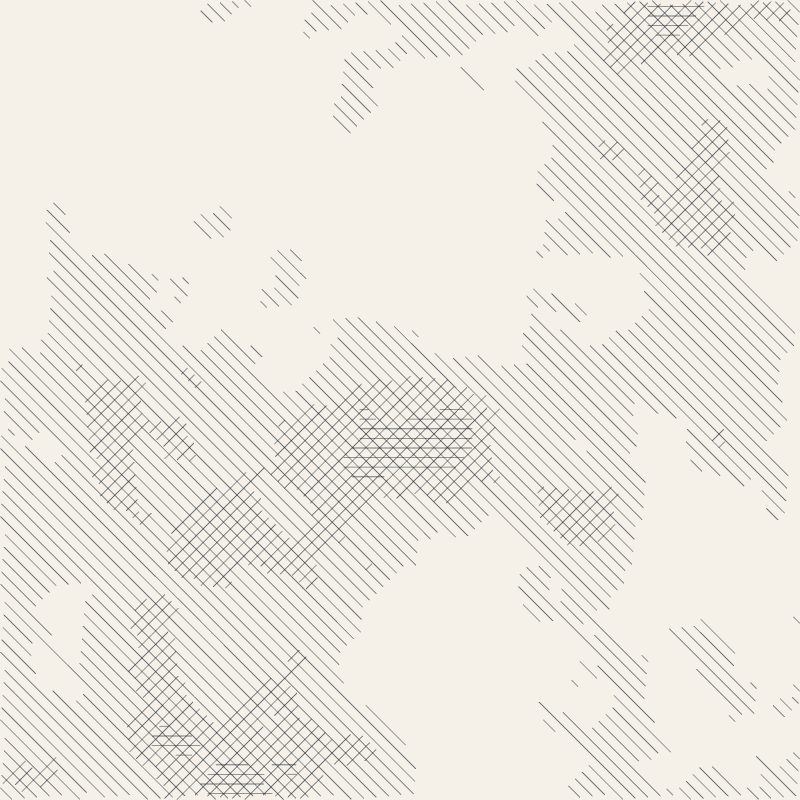
- Plotter-style Hatching · 32 works Line-only shading in the spirit of a pen plotter: tone is built from the density and direction of hatching, cross-hatching and contour strokes rather than from filled pixels.
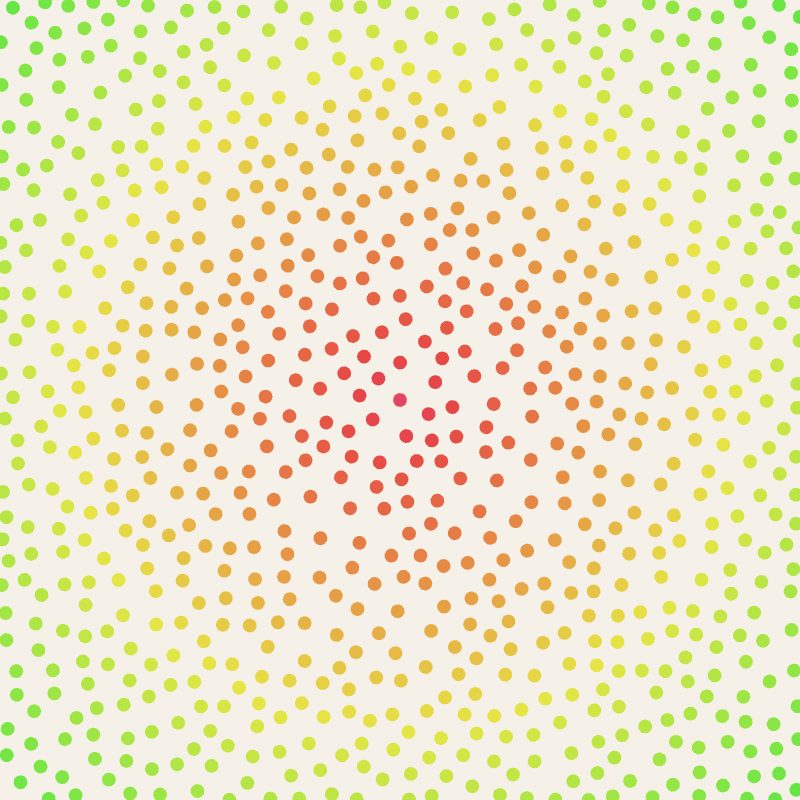
- Poisson Disk Sampling · 6 works A sampling method that scatters points uniformly at random while keeping every pair at least a minimum distance apart — "blue-noise" distribution with no clumps or gaps. Bridson's algorithm makes it fast.
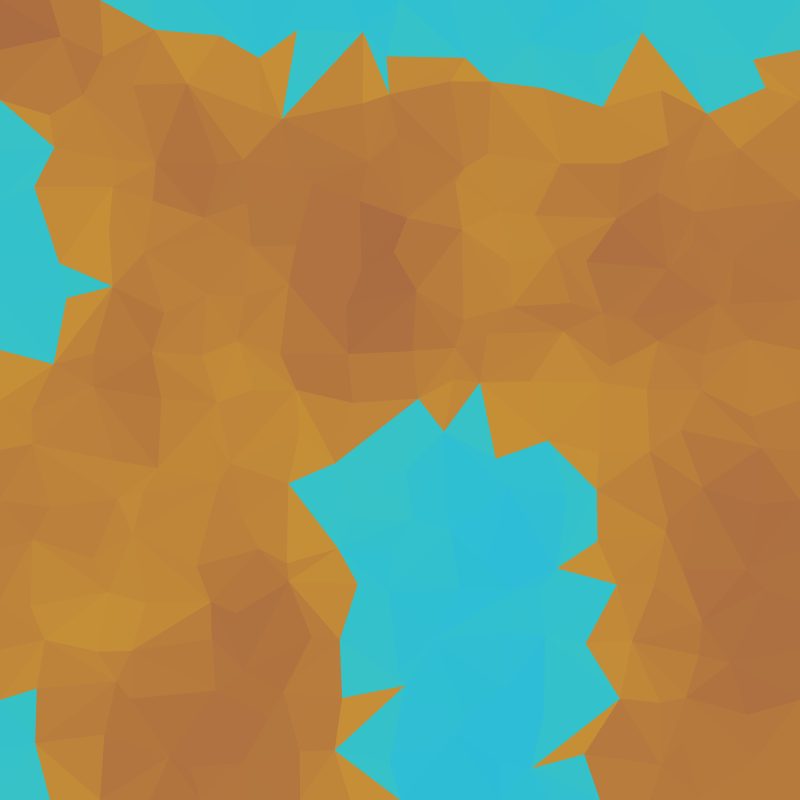
- Polygon Mosaic · 12 works A low-poly mosaic composition that tiles the canvas with coloured polygons — usually the cells of a Voronoi/Delaunay partition of random or feature points.
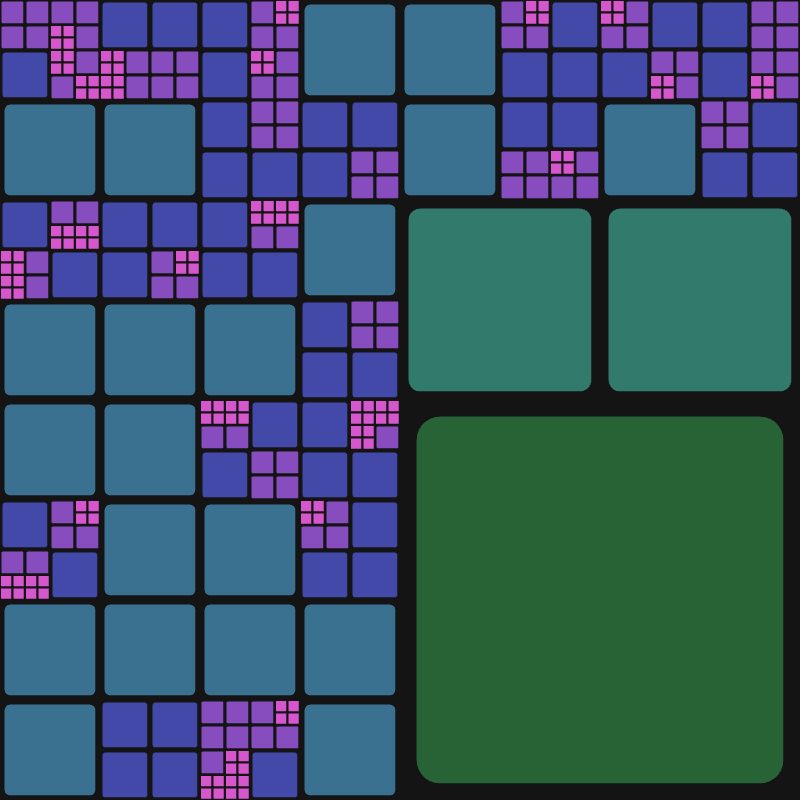
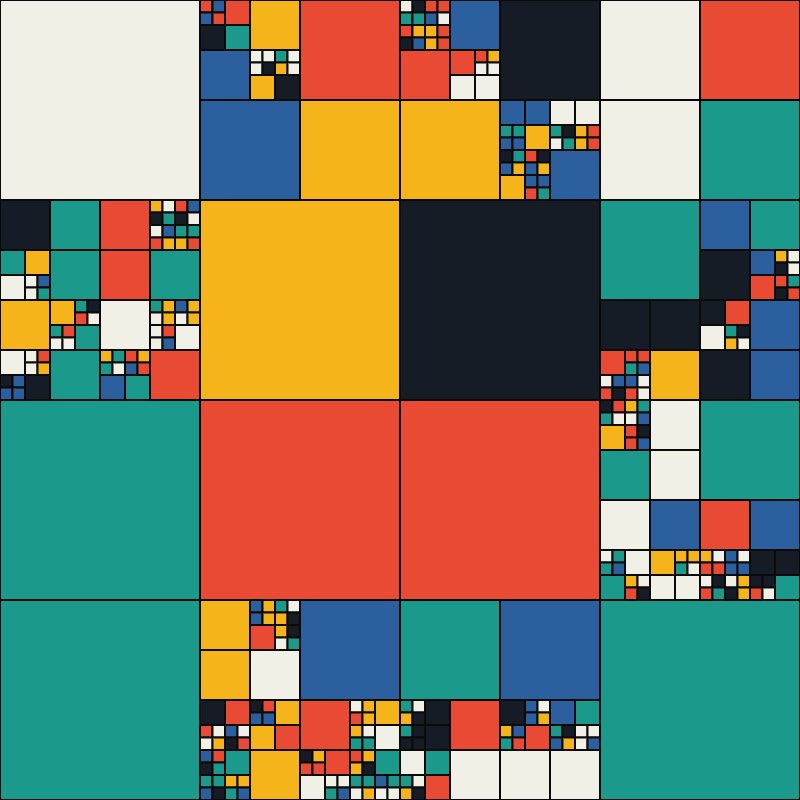
- Quadtree / Recursive Quad Split · 16 works A spatial data structure that recursively divides a rectangle into four quadrants — and, as a generative layout, a way to subdivide a canvas into nested cells driven by detail or randomness.
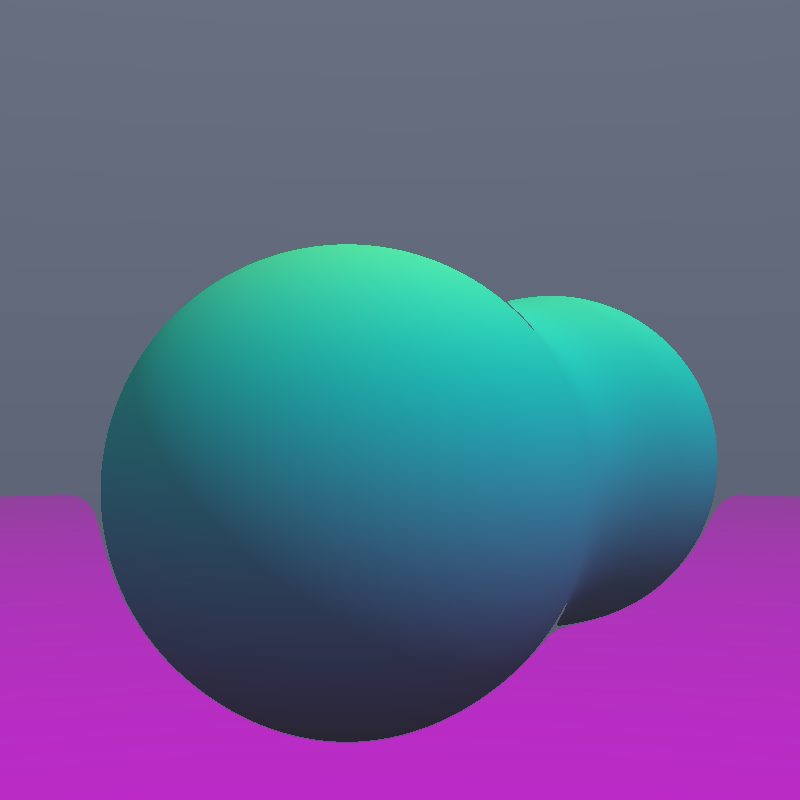
- Raymarching with SDFs · 36 works A rendering technique that marches a ray forward in steps governed by a Signed Distance Function (SDF) to draw implicit surfaces — widely run in a fragment shader for real-time 3D scenes built from math.
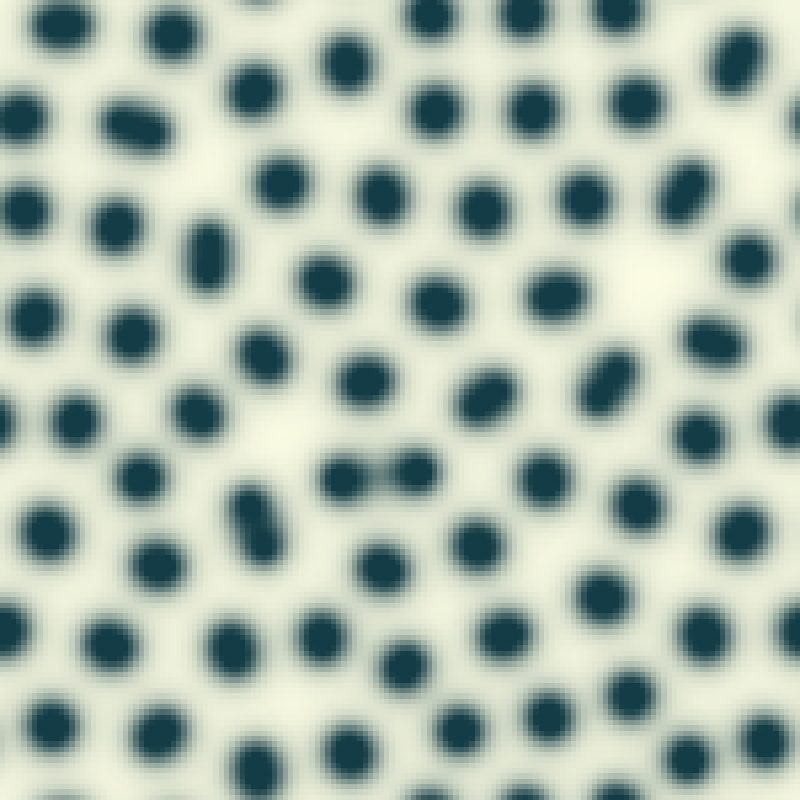
- Reaction-Diffusion · 2 works A system of partial differential equations in which two substances diffuse at different rates while reacting with each other. The Gray–Scott model is the best-known; it spontaneously forms organic, biological-looking patterns (spots, stripes, mazes) — Turing's "morphogenesis".
- Sine–Fract Hash (canonical GLSL one-liner) · 0 works The de-facto pseudo-random hash of shader code: a one-liner that maps a 2D coordinate to a value in [0,1) as fract(sin(dot(p, k)) * m). Cheap, requires no texture or state, and is used as the workhorse randomness source inside fragment shaders (dithering, value/gradient noise, stippling, jitter). It is identified in practice not by a name or an author but by its magic constants.
- Sonification · 1 work The systematic mapping of data or a system's state onto non-speech sound, so that relations in the data become perceivable as relations in the audio. The causal direction is data → sound (the inverse of audio-reactive visuals): the picture and the sound are read out of the *same* underlying process.
- Space Colonization · 4 works An iterative algorithm that grows a branching network — a tree, vein, or root system — by scattering attraction points through a region and repeatedly extending the nearest network nodes toward the attractors that influence them. Branches compete for unoccupied space, naturally producing realistic tree and leaf-vein topologies.
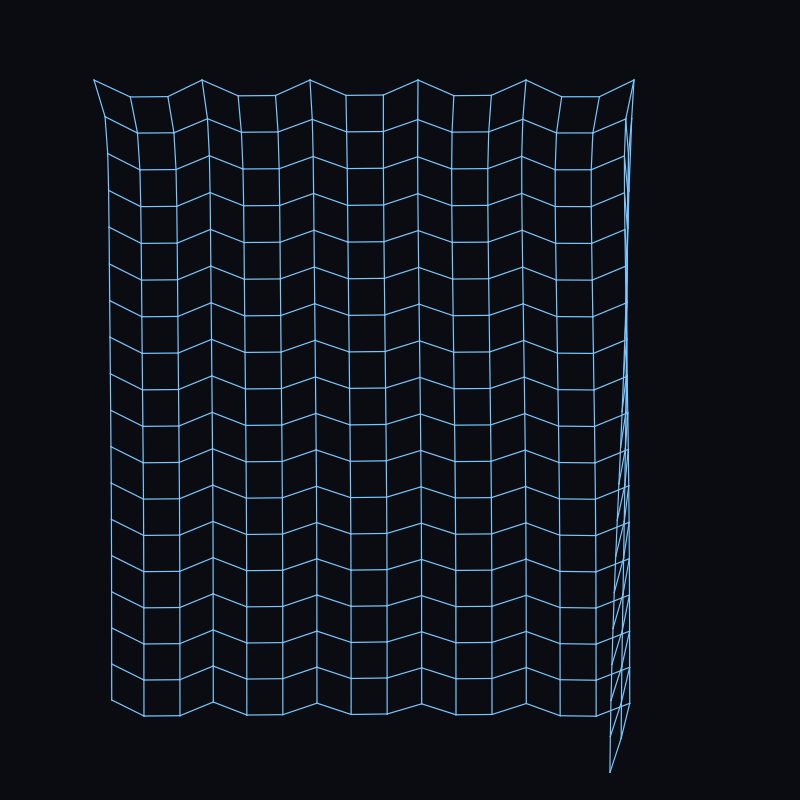
- Spring-Mass / Verlet · 5 works A physics simulation of point masses connected by springs (often integrated with Verlet). Used for cloth, rope, soft bodies and constraint-driven dynamic line work.
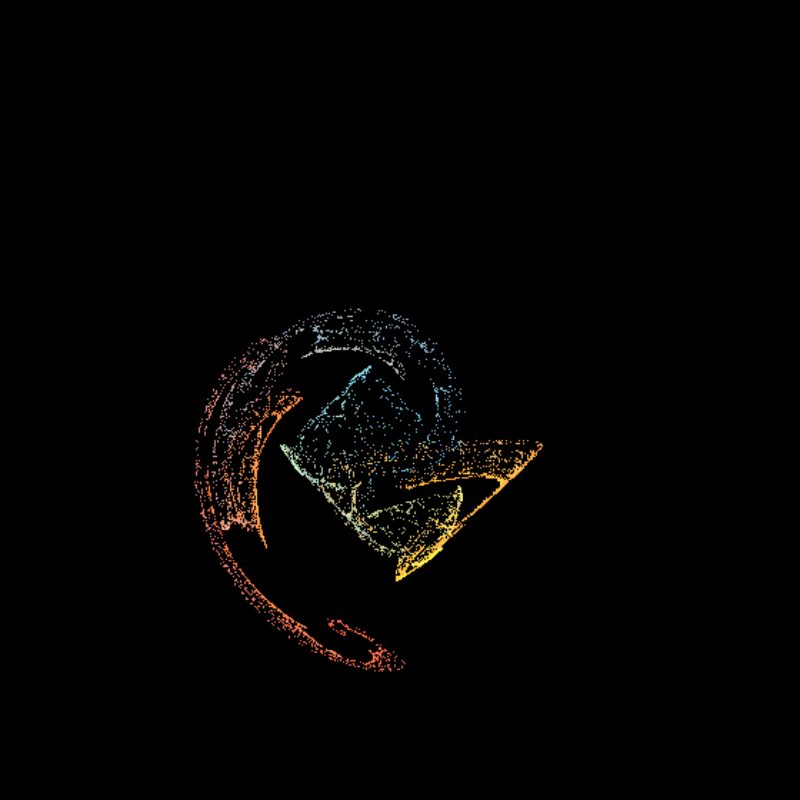
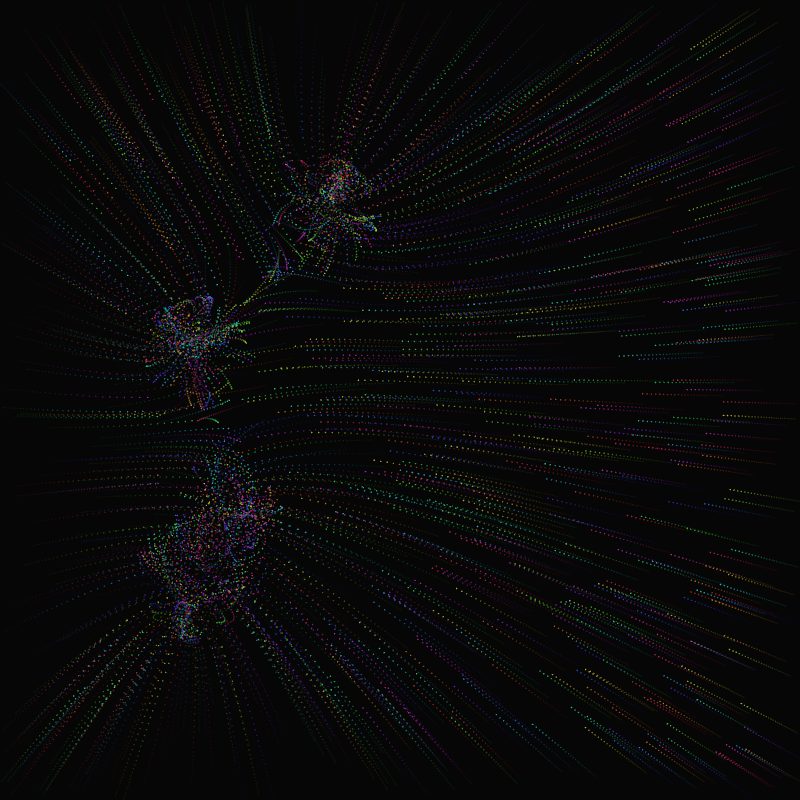
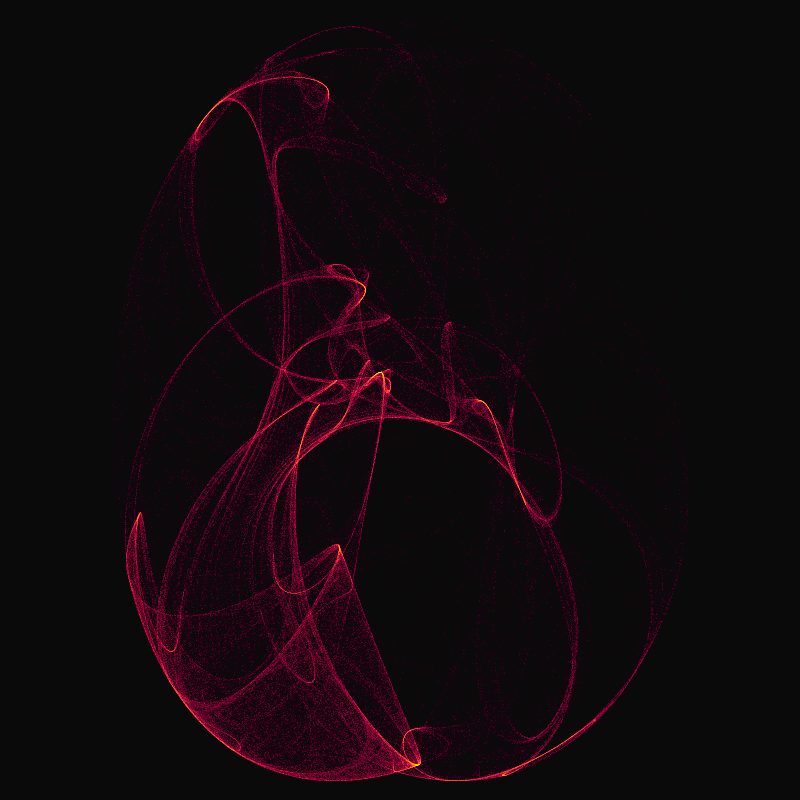
- Strange Attractor · 6 works A chaotic dynamical system (Lorenz, Clifford, De Jong, Pickover…) whose orbit is drawn out by iterating a few simple equations: the trajectory never repeats yet stays bound to an intricate fractal set.
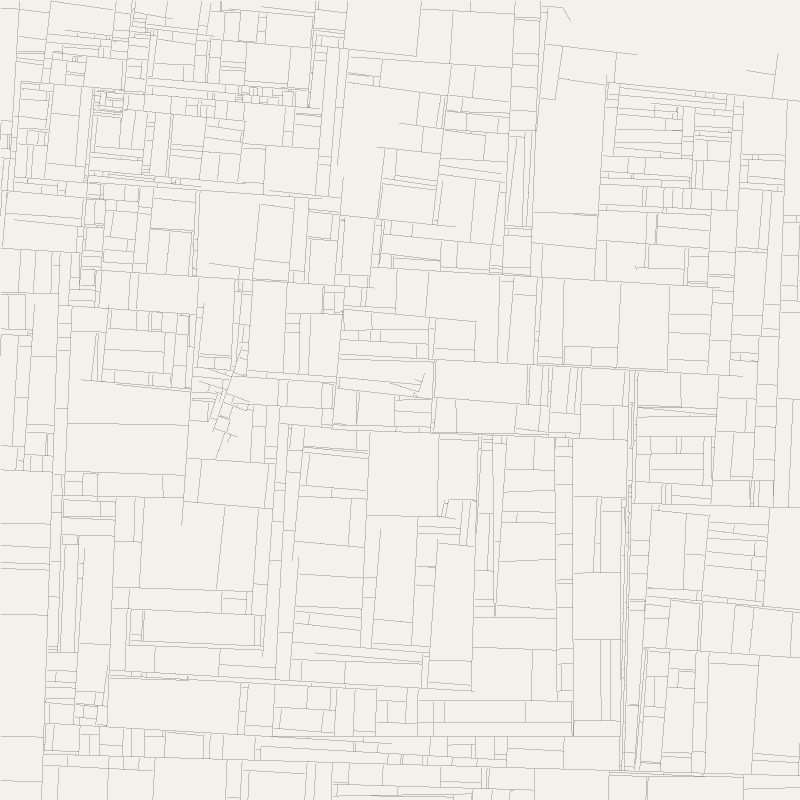
- Substrate · 1 work An agent-based line-growth system in which lines advance across a plane and spawn new lines perpendicular to themselves; each line travels until it collides with another and stops, producing dense crystalline, crack-like or city-map-like networks.
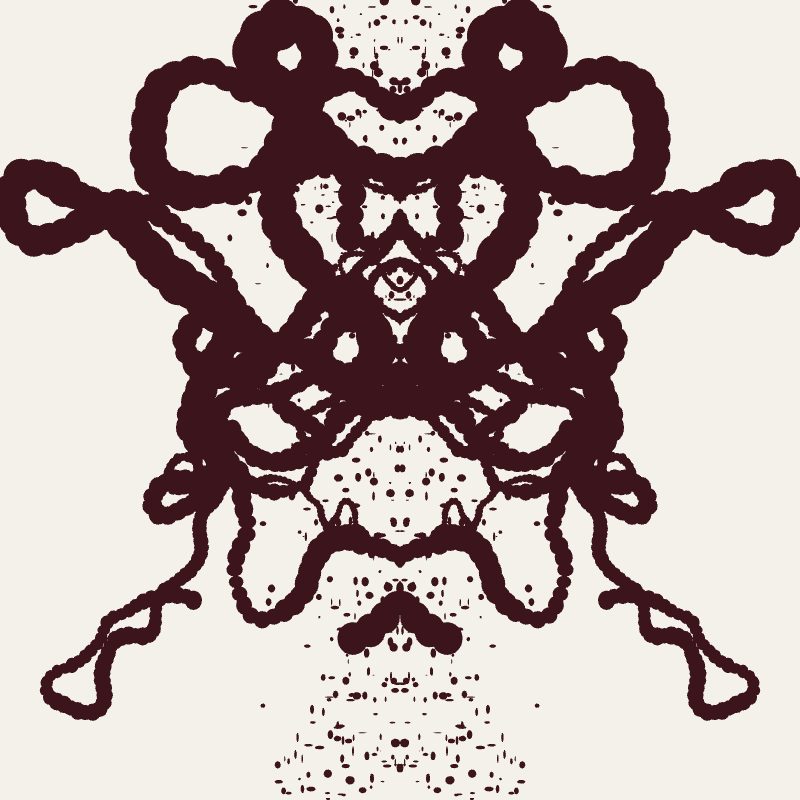
- Symmetric Blob / Rorschach · 5 works Growing a random shape and mirroring it across an axis to make ink-blot-like organic forms (Rorschach symmetry) — the style behind works such as Cryptoblots.
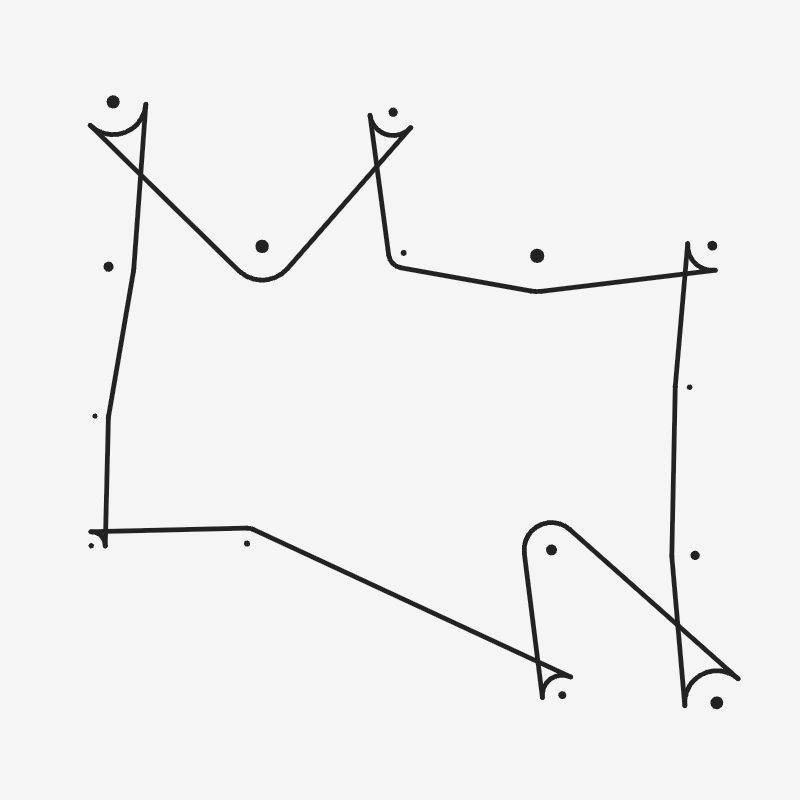
- Tangent Arcs / String Art · 3 works A geometric method that strings tangent lines and arcs between pegs (circles) placed on a field, as if an elastic band or thread were wrapped around them — the technique behind Dmitri Cherniak's "Ringers".
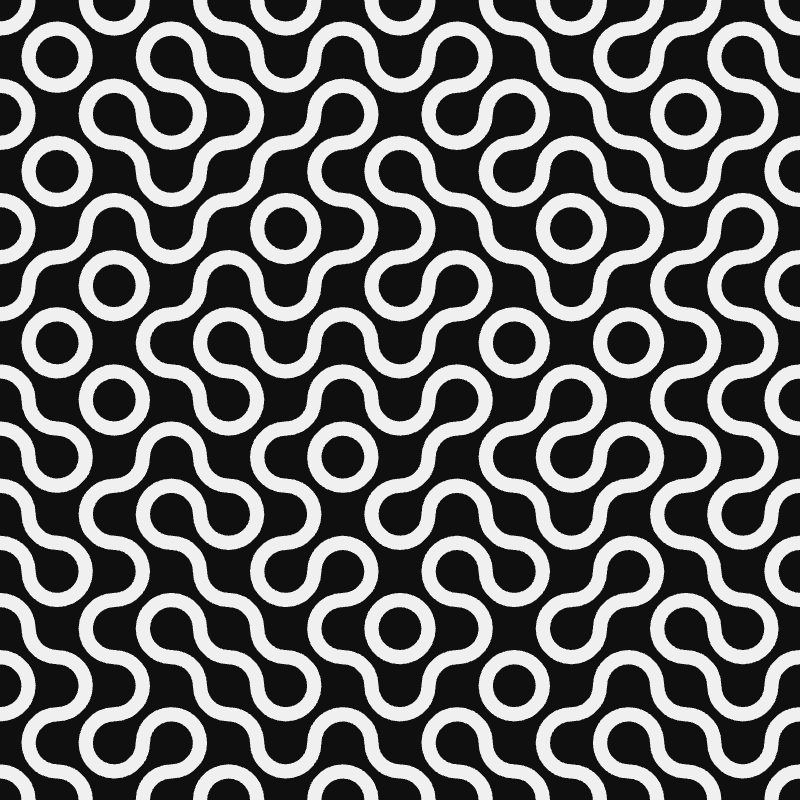
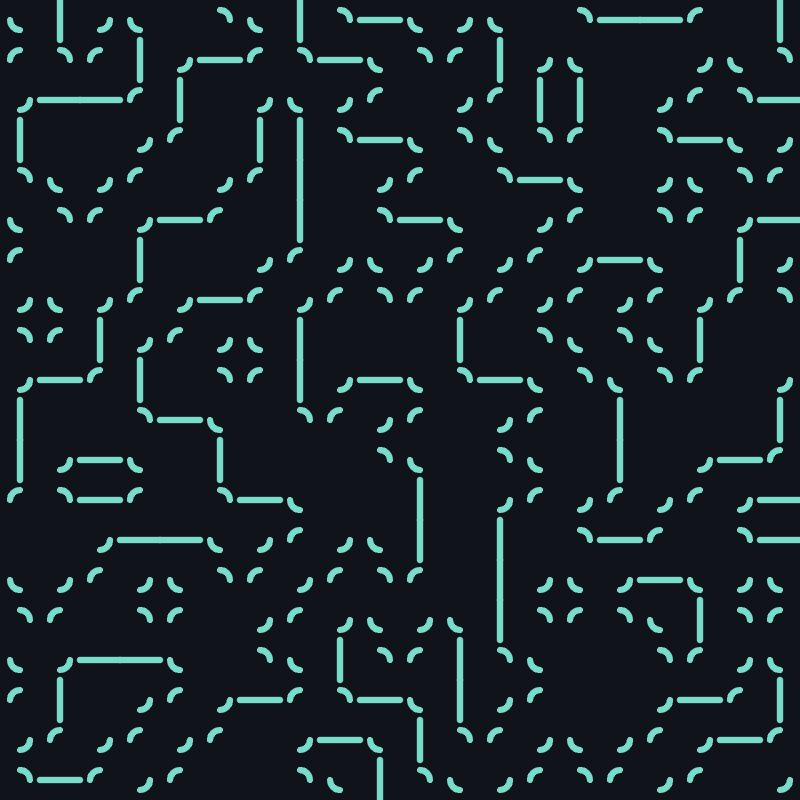
- Truchet Tiles · 11 works A classic technique that tiles a grid with one simple, asymmetric square placed in random orientations, so the tile edges connect into complex global patterns. Variants use diagonal splits or quarter-circle arcs (Smith tiles).
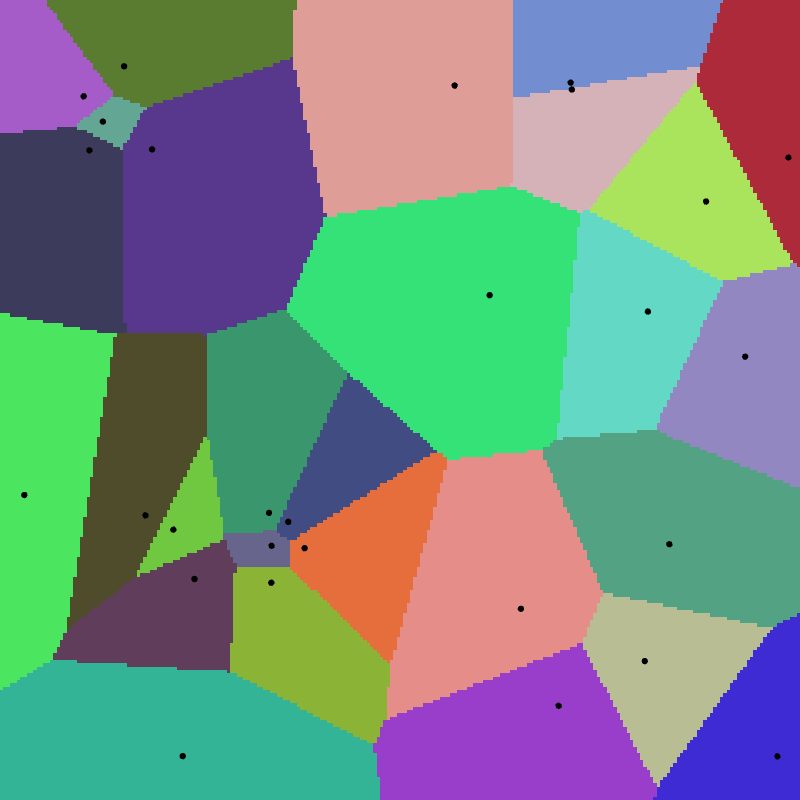
- Voronoi Diagram · 9 works A partition of the plane from a set of seed points (sites): every location is assigned to its nearest site, carving the plane into one convex cell per site. Used for cellular patterns and organic tilings.
- Wave Function Collapse · 2 works A constraint-based generator that fills a grid with tiles so that every local adjacency rule is satisfied, producing globally coherent patterns from a small example. Named by analogy to quantum "collapse" — each cell starts as a superposition of all possible tiles and is resolved one at a time.