Underwater
Monica Rizzolli · 2022

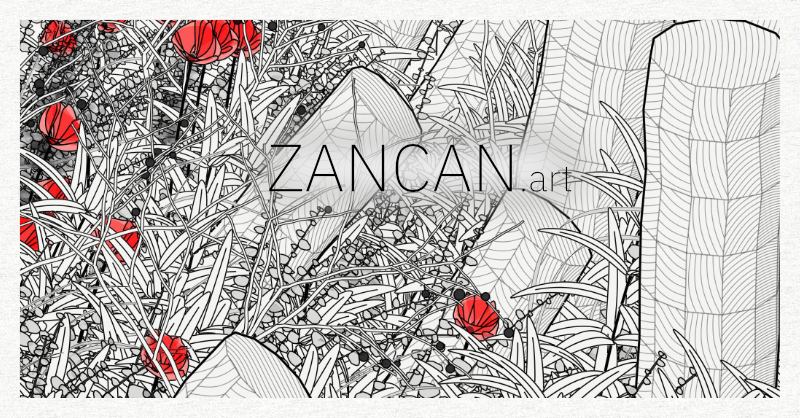
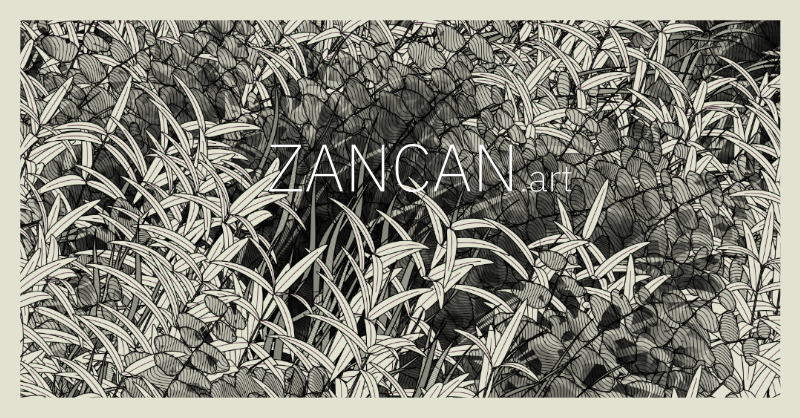
A long-form generative collection of 100 illustrations by Monica Rizzolli portraying seven hypothetical plant species — imagined as fictive descendants of ancient Mexican plants left to grow in the underground aquifer of Mexico City. The abstract aesthetic draws on the pre-naturalist illustrations of medieval herbaria (notably the *Libellus de Medicinalibus Indorum Herbis*); to recreate that quality in code, the superformula is combined with space-colonization algorithms to generate tepal-like forms with characteristic patterns.
How it works
Each token grows one of seven imaginary plant species with real botany in the code: flowers laid out by phyllotaxis (a golden-angle spiral of tepals and stamens) and leaves whose veins branch by space colonization — growing toward scattered auxin sources — all set beneath a wavering noise "water" line.
An sfc32 `Random` (token-seeded) drives a deterministic botanical builder. `FlowerFactory` reads hash byte 2 to pick one of seven plant species (one is "Elote", corn) and byte 3 for a palette, then assembles a `Flower` from botanical parts — `Androecium`, `Anther`, `Stamen`, `Tepal`, `Ornament`. Their placement is real phyllotaxis: `Phyllotaxy` steps an index `t`, putting each element at angle `t · goldenAngle` and radius `∝ √t` — the Vogel spiral that arranges florets in a sunflower — so tepals and stamens spiral out from the centre. The leaves are the distinctive part: each `Leaf` grows its venation by **space colonization** (the Runions–Prusinkiewicz method also modelled in this index's leaf-venation node). Scattered `Auxin` attraction sources pull `Vein` nodes toward them: each vein extends one step in the averaged direction of the auxins within its attraction distance (`_DEFAULT_ATTRACTION_DISTANCE` 500), an auxin is removed once a vein comes within the kill distance (`_DEFAULT_KILL_DISTANCE` 10), and a `Quadtree` keeps the nearest-neighbour queries fast; an open/closed-venation flag decides whether an auxin feeds one vein or several, giving branching or reticulate leaves. The superformula shapes the tepal outlines (per the artist's note). Finally `agua` draws the water surface as a Perlin-noise wobbling horizontal line, and the scene stops (`noLoop`). The class method bodies are shipped minified, so this describes the readable structure — the seven-species factory, the phyllotaxis flowers, the space-colonization venation and the noise water — without asserting the exact minified internals. Grounded in the actual on-chain generator script (sha-256 6e0608d5…, recorded above), not reconstructed.
Algorithms
- Space Colonization primary · classification: human-reviewed
Details
View generator ↗ · Art Blocks ↗
Sources
- On-chain artblocks.io ↗ — Art Blocks collection page (Underwater, 100 works, 2022).
Related works (by shared algorithms)
Last updated 2026-07-16