Artificial Mondrian (KD 55)
Hiroshi Kawano · 1969
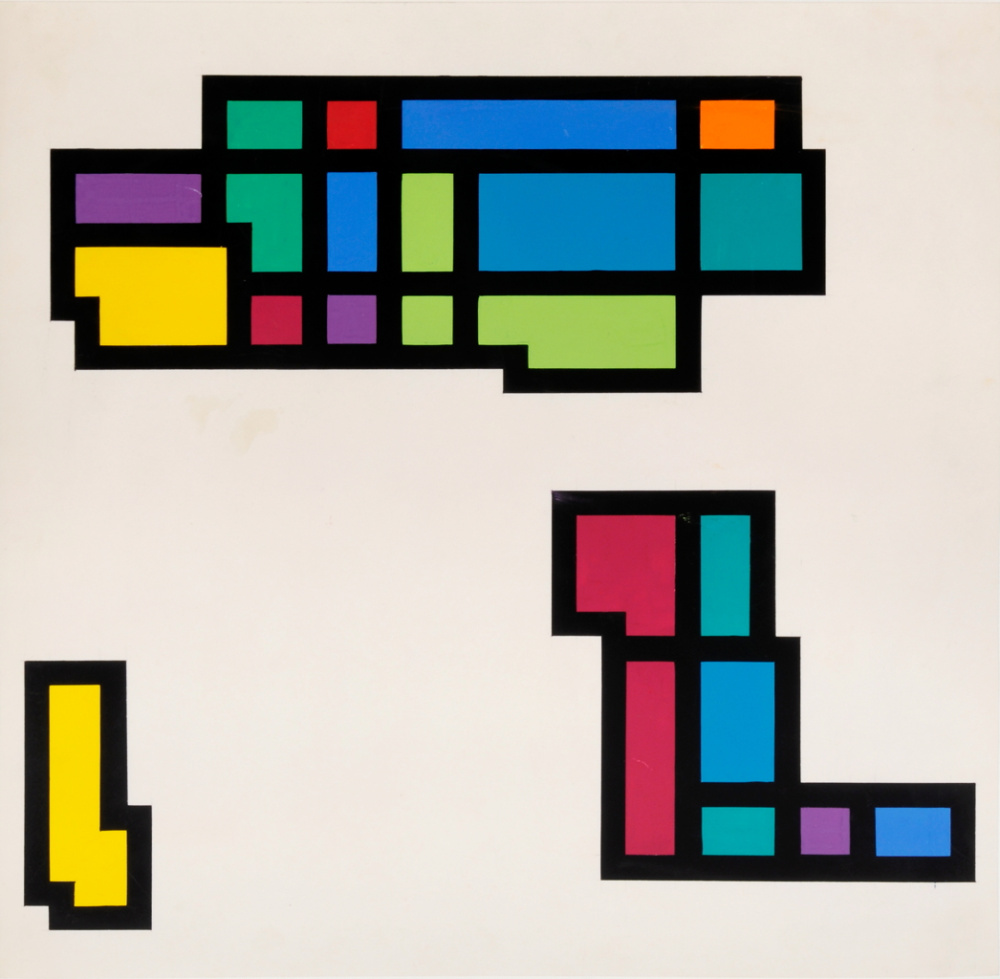
From Kawano's Artificial Mondrian series: he first statistically analysed Piet Mondrian's compositions (the frequency of colours and positions) to build a probabilistic profile, then ran a Markov-chain program on a HITAC 5020 mainframe that stochastically generated new rule-based compositions of intersecting lines and coloured rectangles matching that statistical pattern. The computer produced the design; Kawano rendered it by hand in gouache. The series exemplifies his philosophical project of testing the "logic of artistic creation" through algorithmic generation.
Details
Sources
- Collection zkm.de ↗ — ZKM (holds Kawano's archive) — 'KD 55', 1969, Artificial Mondrian series; HITAC 5020, FORTRAN 4, gouache on paper.
- Web rightclicksave.com ↗ — Right Click Save — Artificial Mondrian made with FORTRAN IV on the HITAC 5020, published Nov 1969 in Computopia.
Referenced by
Last updated 2026-07-16