Kinetic Art
1954–1975 · International
Art that depends on real or apparent motion for its effect, becoming a major phenomenon of the late 1950s and 1960s after earlier 20th-century precedents (Naum Gabo's Standing Wave, 1919–20). Key figures include Alexander Calder, whose air-driven mobiles date from around 1930, and Jean Tinguely, Nicolas Schöffer, Jesús Rafael Soto and Yaacov Agam, who used motors and constructed, often programmed, movement. Its emphasis on motion, time and machine-driven systems links it directly to systematic and algorithmic art, and it overlaps with op art and cybernetic art.
wikidata.org ↗ · vocab.getty.edu ↗ · en.wikipedia.org ↗
Related movements
Works (18)
Forest Symphony
ryuichi-sakamoto · 2013
Light Room (Jena)
otto-piene · 2007
Upward-Falling Fountain
wen-ying-tsai · 1979
3 vertikale Streifen (kinetisches Objekt)
gerhard-von-graevenitz · 1976
Cybernetic Sculpture System No. 1
wen-ying-tsai · 1968
Espaces chromatiques carrées en spirale
gregorio-vardanega · 1968
Cosmos
frank-malina · 1965
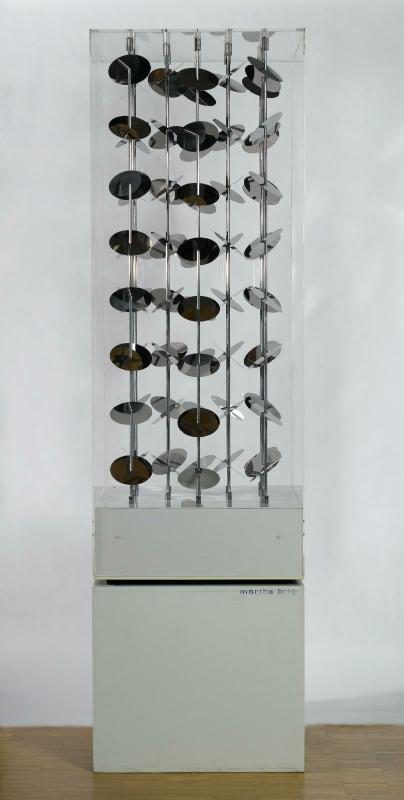
Essaim de reflets
martha-boto · 1965
Microtemps 11
nicolas-schoffer · 1965
Couleurs sonores
gregorio-vardanega · 1963
Light Ballet
otto-piene · 1961
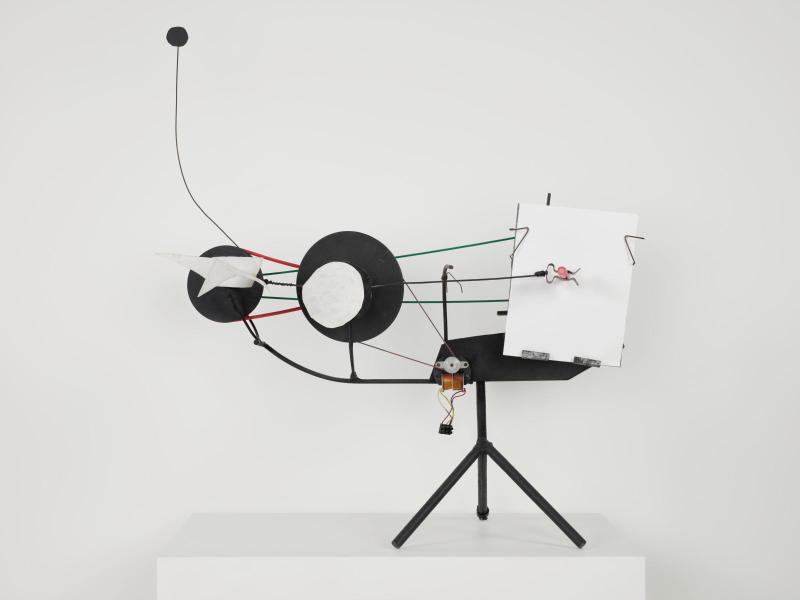
Méta-matic No. 1
jean-tinguely · 1959
Méta-matic No. 17
jean-tinguely · 1959
Aparelho Cinecromático S-14
abraham-palatnik · 1958
CYSP 1
nicolas-schoffer · 1956
Aparelho Cinecromático
abraham-palatnik · 1951
Light Prop for an Electric Stage (Light–Space Modulator)
laszlo-moholy-nagy · 1930

Kinetic Construction (Standing Wave)
naum-gabo · 1920